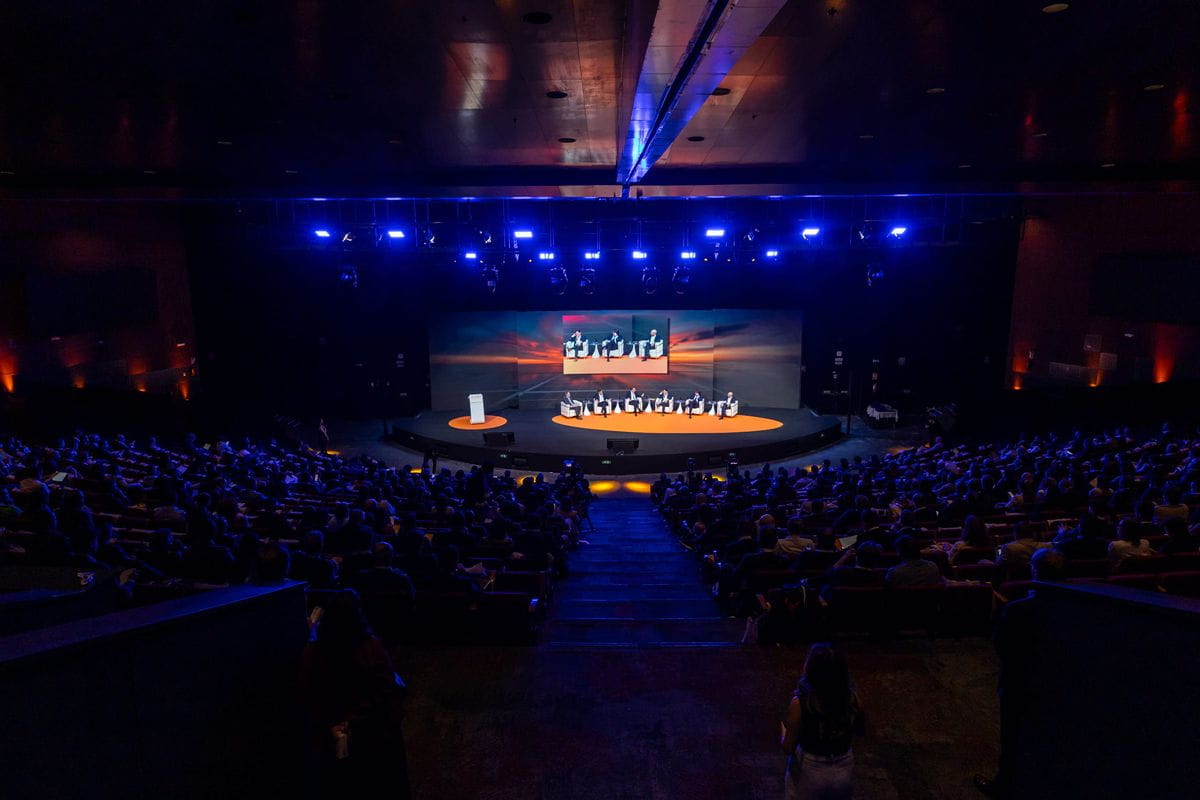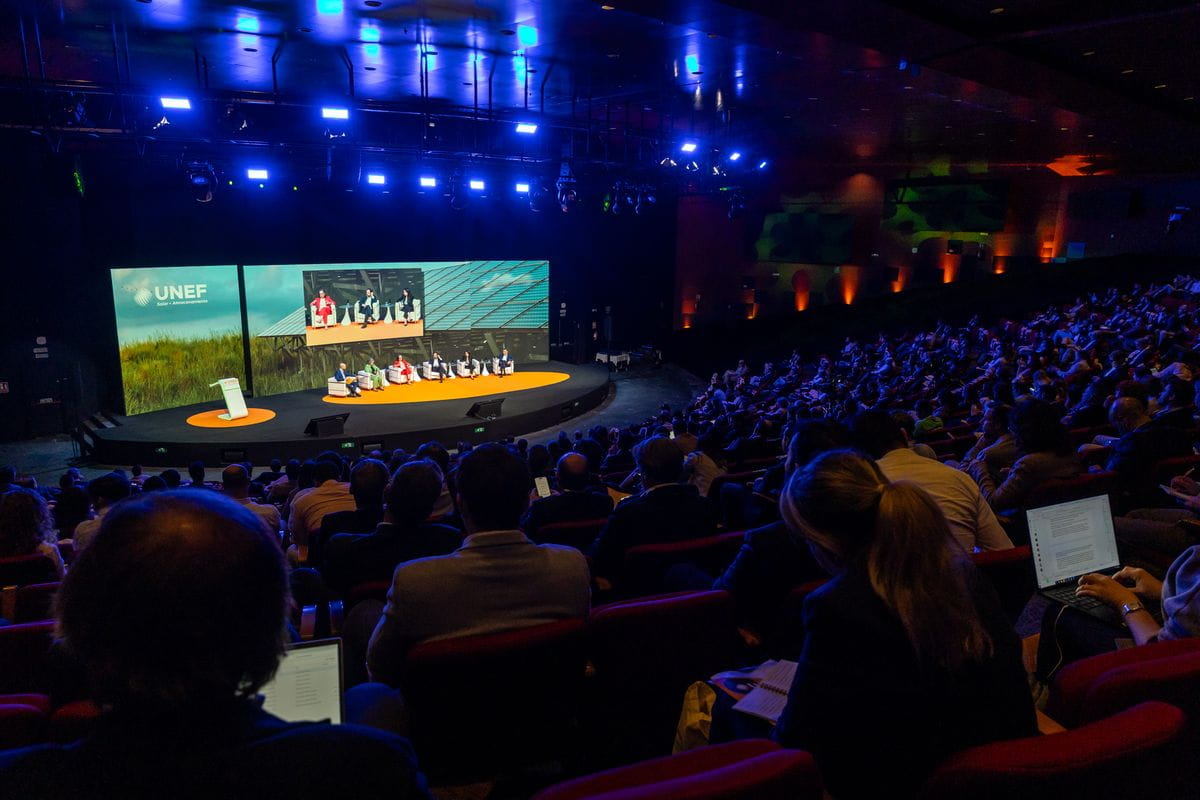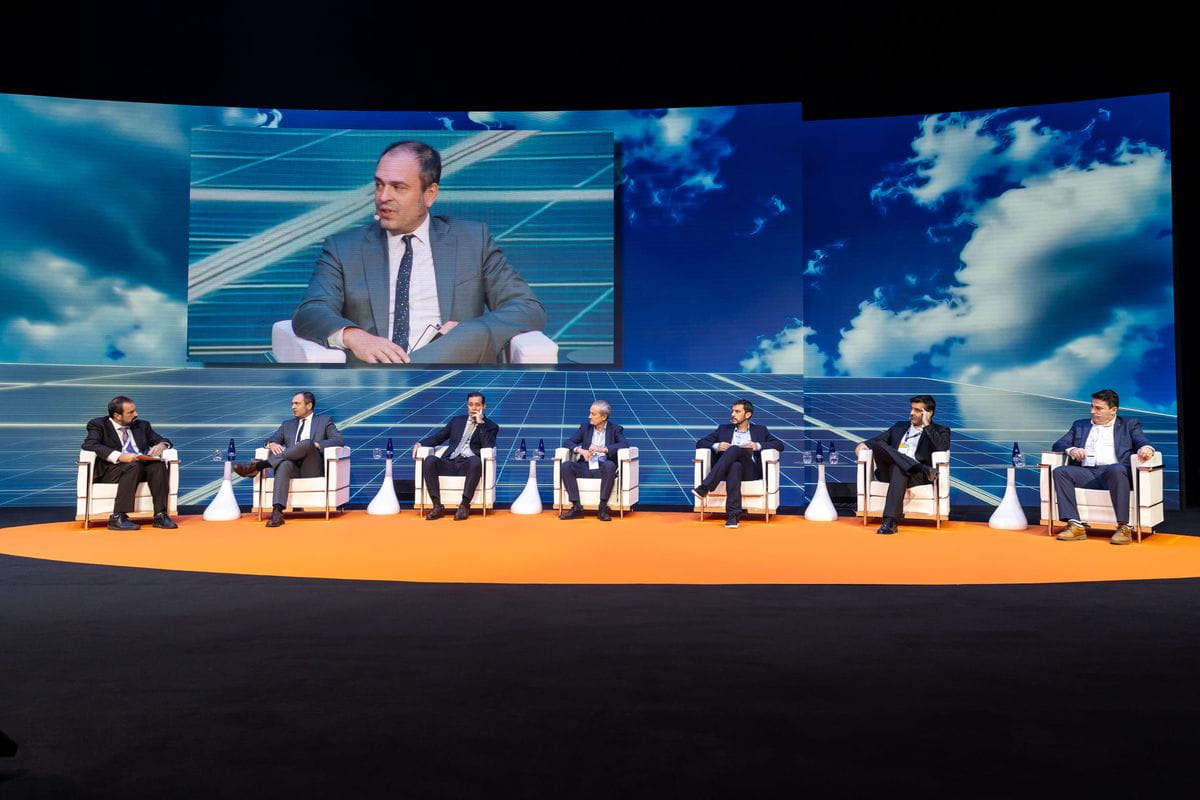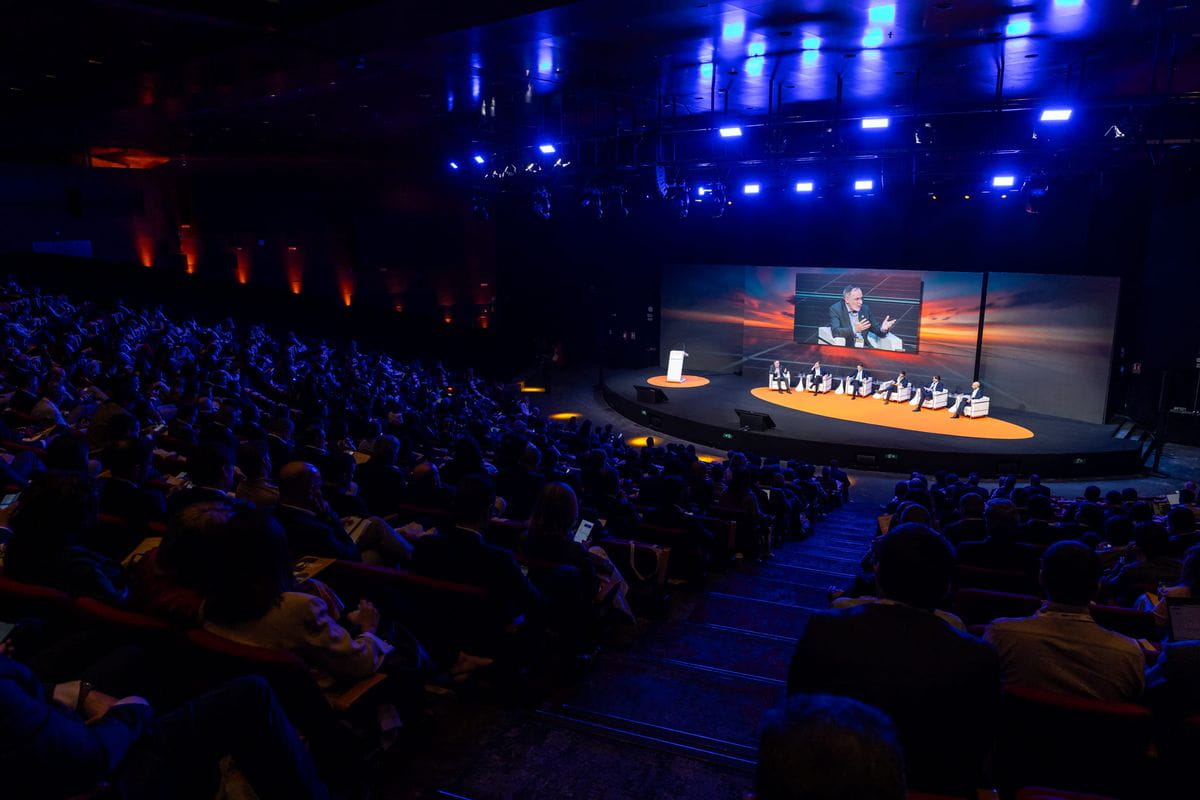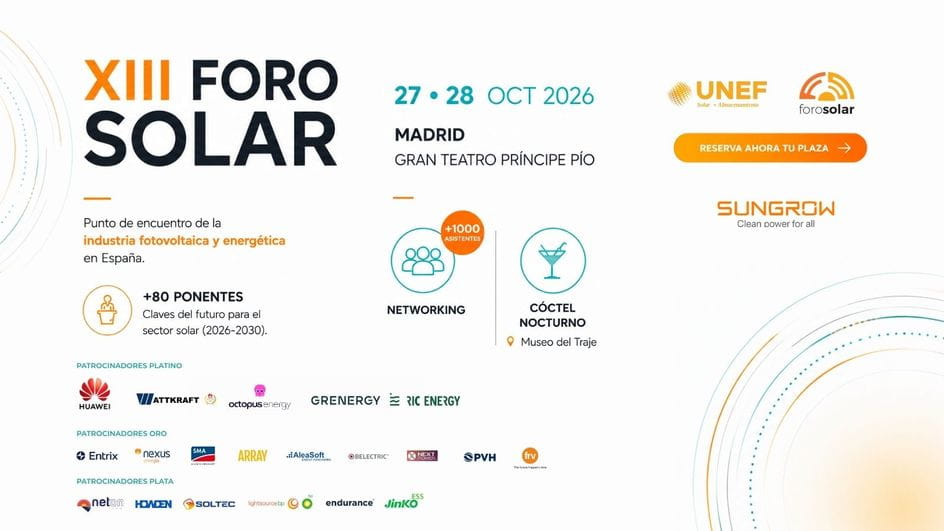
The 13th edition of the UNEF Solar Forum, the benchmark event for the sector, already has a date!
October 27–28, 2026 | Gran Teatro Príncipe Pío (https://maps.app.goo.gl/btvC3Lo8N6JeDtJ99)
The Solar Forum returns as the key meeting point for the photovoltaic industry: two days designed to share knowledge, create business opportunities, and connect with leading professionals in the sector.
More than 80 speakers from companies and government institutions will gather to share their perspectives and discuss the hottest topics in roundtable sessions covering all areas of the sector: Self-consumption, Storage, Regulation, Financing, and Technological Innovation.
The event, which has positioned itself as the sector’s “place to be,” will also offer various networking spaces with the more than 1,000 participants we expect. This year, we are introducing important new features and dynamics designed to boost networking among attendees, in addition to coffee breaks, the cocktail reception, and the traditional dinner.
In this edition, the Forum comes to the heart of Madrid. The Gran Teatro Príncipe Pío will become a true “solar station,” the meeting point where the entire sector will connect.
Don’t miss the event that sets trends: high-quality content, top-level networking, strong participation—all while keeping the key objective in focus: the energy transition!
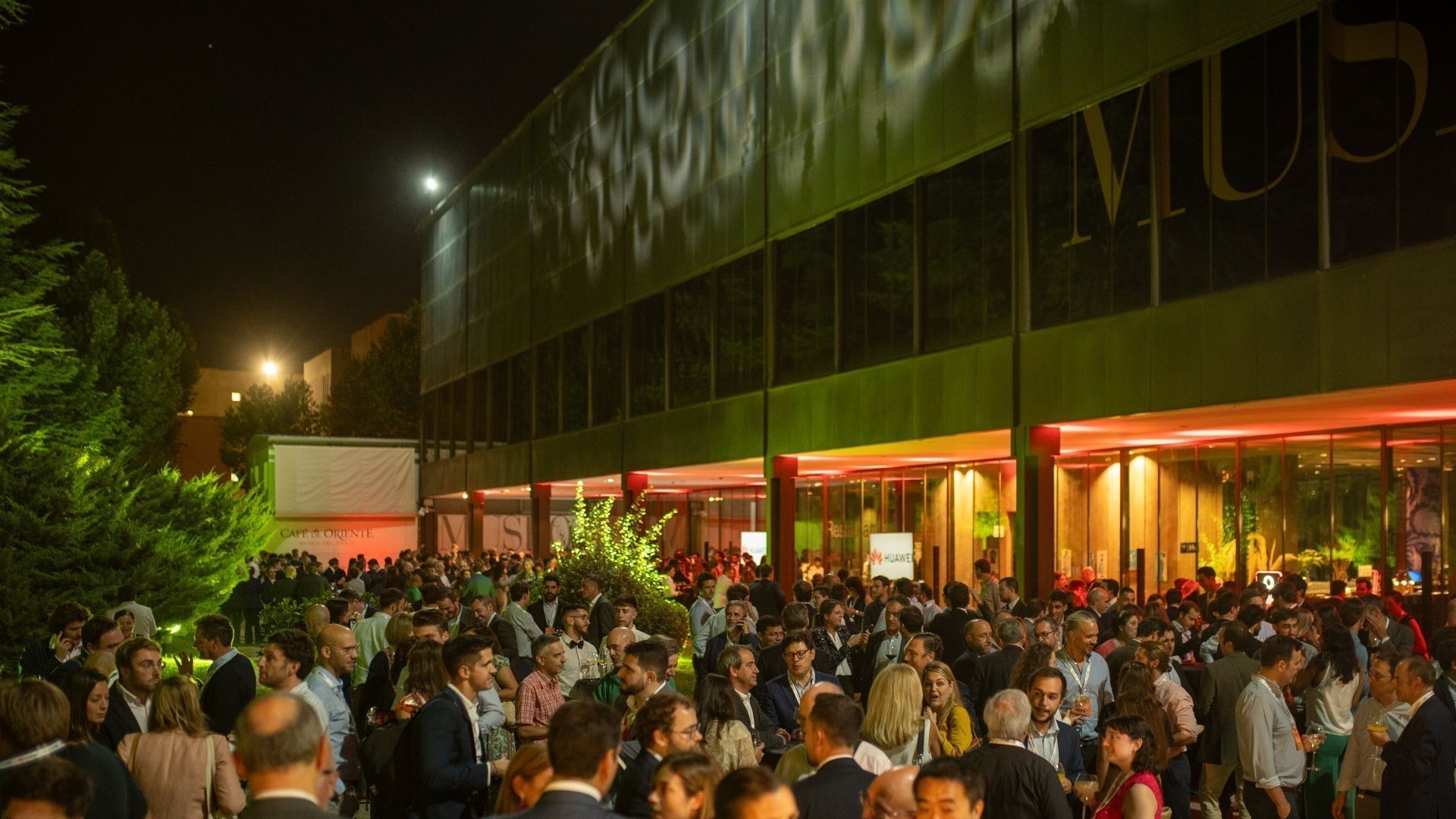
13th Solar Forum Cocktail
October 27 and 28, 2026
Members: €610 + VAT
General: €775 + VAT
If you are an Energy Community (established or not) and want to attend the 13th Solar Forum, contact comunidadesenergeticas@unef.es directly.
4-for-3 Promotion
(for every 3 registrations, the 4th is free)
Reserve your spot using the form below!
October 27
09:00h – 09:30h | Opening Remarks
09:30h – 09:50h | Special Address: Energy and Geostrategy – Key Aspects
09:50h – 10:50h | Markets: Is Market Reform Necessary?
What price, revenue and development trends can we expect in the short term? When will demand arrive? Is the proliferation of zero prices and curtailment a risk to the ecological transition? Is it necessary to redefine the strategy in the short and long term? Can PPAs continue to be signed? Under what conditions?
10:50h – 11:50h | Coffee Break Sponsored by ENTRIX
12:00h – 13:00h | Is Self-Consumption Set to Redefine New Energy Models and System Flexibility? Is Self-Consumption an Alternative to Grid Reinforcement?
We are reaching a turning point where self-consumption is no longer an option but is becoming a structural pillar of the energy system. What regulatory measures or tax incentives are still needed to support the deployment of self-consumption? In a context of increasingly constrained grids, can self-consumption redefine demand management and pave the way towards a more flexible and distributed model?
13:05h – 14:25h | Is Energy Storage the Key to Short-Term Development?
What barriers exist: regulatory or financial? How can we build a robust model to increase bankability? The role of tolling agreements and other developments in financing.
14:25h – 16:00h | Networking Lunch
16:00h – 17:00h | The Political Key: How Are Policymakers Addressing the Evolution of the Energy Transition?
Do they believe solar energy has reached its development peak? How do they plan to provide services and finance the new electricity demand resulting from electrification?
17:15h – 18:15h | Keynote Speaker: EU Commission – Impact of the Industrial Accelerator Act: Transposition and Consequences
17:15–18:15 What Is Voltage Control and How Is It Being Implemented in Spain Following the Approval of the New PO 7.4? What Benefits Do Voltage Control and Grid Forming Bring to the System? What Is the Current Regulatory Status of Grid Forming?
In a scenario of high renewable penetration, what synergies can emerge between grid forming and voltage control for electricity system management? How is grid forming evolving from a regulatory perspective, and what requirements could be adopted from countries that are already implementing it? What regulations are needed to encourage participation in voltage control?
18:15h – 19:15h | Panel Organized by FOTOPLAT: What Does the Market Need and Where Is Innovation Heading?
The Evening Cocktail Reception and the PHOTOvoltaica and StartUp Solar Awards Ceremony will take place at the Museum of Costume (Museo del Traje).
October 28
09:00–10:00 Can Industrial-Scale Self-Consumption Drive the Acceleration of Industrial Electrification?
What are the challenges facing your business models in advancing electrification? Does industrial self-consumption play a key role as an alternative to grid reinforcement? What does demand need in order to be electrified? How can we ensure industrial competitiveness and capitalize on opportunities? What regulatory and market measures are needed? Following the elimination of the IVPEE, what other measures could be adopted to reduce electricity bills and promote electrification? What role will ETS II play in promoting the electrification of mobility and industry through self-consumption? How can industrial self-consumption be combined with flexible grid access permits and energy storage?
10:00–10:50 Project Development and Technology Selection. Performance, Degradation and Warranties: How Can BESS Be Designed and Contracted to Meet Real-World Operational Requirements Throughout Its Lifetime?
How does the expected operation influence the design and sizing requirements set out in BESS supply and installation contracts? What should developers demand when selecting technology and manufacturers, beyond price? What do capacity, degradation and efficiency warranties cover, and under what operating conditions? How is actual performance verified, and who is responsible when expected performance levels are not met? How should the contractual structure of a BESS installation be configured, and how can the gaps between contracts be addressed to ensure bankability?
10:50h – 11:50h | Coffee Break
12:00h – 13:00h | How Can We Reduce Vulnerabilities and Barriers in the Energy System and Equipment Manufacturing Without Slowing Down Decarbonization?
How can we ensure system and supply chain security while maintaining competitiveness? What impact do you expect the forthcoming European legislation, the Industrial Accelerator Act, to have? Does the European Commission's new cybersecurity proposal represent an improvement in security or an insurmountable barrier? Which elements are genuinely necessary?
13:00h – 14:00h | What Impact Will the New Regulation on Benefits for Citizens Have on Social Acceptance of Projects? Renewable Acceleration Zones, the Certificate of Excellence and Mandatory Benefit-Sharing.
What impact could Royal Decree-Law 7/2026 have on the relationship between projects and local communities? Are the measures appropriate to ensure genuine social acceptance? How will the Renewable Acceleration Zones framework change project permitting? What role do local authorities play in managing and distributing benefits to citizens? How can companies develop models for citizen participation and benefits for local communities?
14:00h – 14:20h | Solar PV Sector Analysis
14:20h – 16:00h | Networking Lunch
16:00h – 17:00h | Will the New 2025–2030 Planning and Flexible Grid Access Permits Help Unlock Grid Access and Connection for Consumers and Energy Storage?
Can the new grid planning framework eliminate the bottleneck in grid access and connection? What impact do flexible access permits have on published demand capacity? Will the new planning framework and flexible access permits help unlock nodes where the distribution and transmission system operators have not reached an agreement on the reference value? What impact are flexible access permits expected to have on the need for grid investment? What access and connection barriers are data centre development facing? Beyond new lines and substations, what other elements (reactors, STATCOMs, synchronous condensers) included in the new planning framework will help integrate more renewable generation, demand and storage?
17:00h – 18:00h | Financing Solar in a New Market: Debt, Refinancing and Asset Adaptation – From PPAs to Tolling
What has changed more than we expected, and which variable is putting the greatest pressure on solar project debt today? Are we facing a genuine problem with projects' debt repayment capacity, or is it primarily a need to adapt financial structures that were designed for a different market context? When an asset starts generating less cash than expected, what should be the order of action? Renegotiate debt, renegotiate the PPA, add storage, change the market strategy, or contribute equity?
18:00h – 18:15h | Closing Remarks