- Although solar self-consumption continues to grow, the pace has slowed: 1,139 MW were installed in 2025, 3.7% less than in 2024.
- 36,330 new households installed self-consumption systems in 2025, but the installation rate has slowed following the withdrawal of measures such as personal income tax deductions (IRPF) for home energy-efficiency renovation works.
- The sector is deeply concerned that the non-ratification this week of Royal Decree-Law 16/2025, which introduced an extension of the tax deduction for residential energy-efficiency works, could further worsen this slowdown.
- Particularly after the blackout, an increase in interest in energy storage solutions has been observed, which are essential for the flexibility of the electricity system.
- Off-grid installations, with 55 new MW installed in 2025, and the industrial sector, which added 674 MW last year, are driving sector growth.
- UNEF calls for regulatory and fiscal improvements to boost self-consumption, especially collective self-consumption, which allows energy to be shared among multiple users and optimises investments.
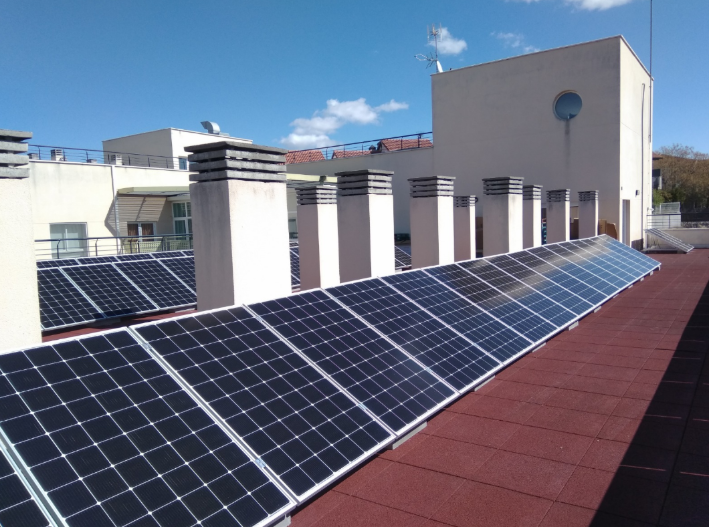
Madrid, 29 January 2026 – Solar self-consumption in Spain continues to advance and has now reached 9.3 GW of installed capacity, consolidating itself as one of the main drivers of the energy transition, business competitiveness and energy savings for consumers.
However, data for 2025, published today by UNEF, show that although self-consumption continues to grow, the pace of expansion has slowed: 1,139 MW were installed in 2025, 3.7% less than in 2024.
During 2025, 36,330 new households installed self-consumption systems, adding 229 MW. This represents a 17% slowdown compared to 2024, when 275 MW were installed. UNEF warns that this slowdown could increase significantly following the failure to ratify Royal Decree-Law 16/2025, which introduced an extension of the personal income tax deduction for residential energy-efficiency improvements, a key driver for residential self-consumption.
This is compounded by the continued decline in surplus electricity prices in free-market tariffs, which makes it increasingly necessary to enhance the attractiveness of the simplified compensation mechanism within the regulated tariff. In this context, UNEF considers it essential to improve surplus compensation in the regulated tariff, allowing compensation to also cover the fixed component and grid charges of the electricity bill, as well as enabling the settlement of surplus value beyond the monthly billing period.
A similar trend has been observed in the commercial sector, where 176 MW were installed last year, representing 15% less than in 2024.
Together with the residential segment, the commercial sector has significant potential for the development of collective self-consumption projects, which allow the energy generated to be shared and installations to be optimised. However, this model has yet to fully take off. For this reason, the sector is calling for the effective implementation of the improvements included in the draft of the new Self-Consumption Royal Decree, such as the figure of the self-consumption manager, the possibility of sharing surplus energy, and the expansion of the self-consumption radius, which would increase the number of potential participants.
Industrial self-consumption added 679 MW in 2025, representing a slight increase in installation pace compared to 2024 (+0.7%). This growth is driven by the development of larger-capacity projects, which are gaining weight within the overall market. Nevertheless, UNEF stresses the need to facilitate industrial self-consumption through measures such as extending simplified processing and compensation to installations with up to 500 kW of grid access capacity, as well as greater variability in electricity tariffs by increasing the weight of the variable component. These measures would help maximise the value of self-consumed energy in a context of low surplus electricity prices.
This year has also seen significant growth — up to 105% — in off-grid installations, which added 55 new MW.
Across the board, 2025 has seen growing interest in self-consumption with storage, particularly after the blackout. Although the published data refer only to photovoltaic capacity, UNEF highlights that many of the inverters installed are already prepared to incorporate batteries. In this regard, the sector considers the approval of the new Self-Consumption Royal Decree to be key, as it introduces distributed storage into the regulatory framework for the first time.
Self-consumption is also consolidating its role as a fundamental tool for relieving congestion in electricity networks, since energy is generated and consumed at the same location, avoiding the use of the grid and reducing the need for investment in grid reinforcements. Storage also allows these benefits to extend to other hours of the day and manage larger energy volumes, moving towards a more flexible energy system based on the combination of self-consumption and distributed storage.
UNEF also recalls the existing problems in the processing of subsidies, particularly those linked to Next Generation funds, and calls both for the acceleration of pending applications by the Autonomous Communities and the implementation of stable fiscal incentives, such as a reduced VAT rate for photovoltaic installation components.
Among other priority measures to reactivate the self-consumption market, UNEF advocates:
- Restoring personal income tax deductions (IRPF) for home energy-efficiency renovation works.
- Extending the exemption from requesting grid access and connection permits to all installations that inject less than 15 kW into the grid, regardless of their installed capacity.
- Applying the exemption from requesting Prior Administrative Authorisation and Construction Authorisation (AAP and AAC) to all self-consumption installations below 500 kW in the Autonomous Communities that still do not comply with this regulation: Galicia, Cantabria, Castile and León, La Rioja, Aragón, Castile-La Mancha, Valencia, the Canary Islands and the Balearic Islands.
- Incorporating a dynamic ex-post coefficient model for collective self-consumption, so users pay only for the energy actually consumed from the grid.
- Including energy savings from self-consumption in the Energy Savings Certificates (CAE) system.
- Developing a specific regulatory framework for energy communities.
Need for new measures to meet PNIEC targets
With a total installed capacity of 9.3 GW, solar self-consumption remains a key pillar of the energy transition. However, to reach the 19 GW target set in the National Energy and Climate Plan (PNIEC), around 2 GW will need to be installed annually in the coming years.
“Self-consumption has demonstrated its great value in reducing electricity bills, tackling polluting emissions, strengthening energy independence and lowering investment needs in grid infrastructure. It is now essential to provide it with a stable and ambitious regulatory framework that can accelerate its growth and unlock its full potential,” said José Donoso, Director General of UNEF.